Reason Why Nothing Can Dethrone Oil in Every Game of Power In a recent report, Goldman Sachs (GS) has predicted that oil prices will continue to rise due to global demand, despite efforts to shift towards renewable energy sources. The report highlights that oil remains a crucial component in the global energy mix, with no viable alternative yet available to meet the world's energy needs. According to the International Energy Agency (IEA), global oil demand is expected to reach 101.6 million barrels per day (mb/d) by 2025, with the majority coming from emerging markets such as China and India. This growth in demand is expected to drive up oil prices, making it even more challenging for alternative energy sources to compete. The report also notes that while electric vehicles (EVs) are gaining popularity, they still account for only a small fraction of the global vehicle market. Even if EVs were to become the dominant form of transportation, it would take decades for the global energy mix to shift significantly towards renewable energy sources. In the meantime, oil-producing countries such as Saudi Arabia and Russia will continue to wield significant influence over global energy markets. Their ability to control oil supply and prices will remain a key factor in shaping the global energy landscape. As the world grapples with the challenges of climate change and energy security, it is clear that oil will remain a dominant player in the game of power for the foreseeable future.
Vietstock Kinh te nganh • 05/27/2026
Neutral
Summary
The core idea of the story, in a faster reading layer.
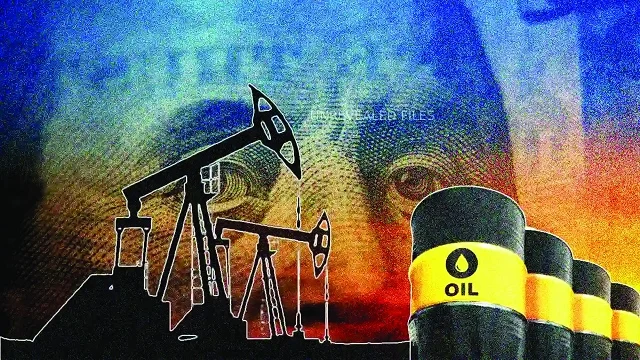
Oil remains the sole global power source capable of causing an immediate economic collapse if the flow is disrupted. The Strait of Hormuz blockade at the beginning of 2026 has shown that oil still plays a crucial role in the global economic system.
AI quick analysis
A short investor-focused read on transmission channels, sectors, and near-term watchpoints.
1) Context & Scope of Analysis
- Oil remains a crucial component in the global economic system.
- The Strait of Hormuz blockade at the beginning of 2026 has demonstrated this.
2) Mechanism of Impact
- Oil is the sole global power source capable of causing an immediate collapse of any economy upon being cut off.
- When the flow is cut off, economies dependent on oil will be severely affected.
- 3) Benefiting or Pressured Groups/Industries:
- Benefiting:
- Oil-producing and trading companies, as well as related industries.
- Pressured:
- Economies dependent on oil, companies producing and trading other commodities when oil prices rise.
4) Risks to Monitor
- Risks related to oil supply and stability of oil transportation routes.
- Risks related to oil prices and their impact on economies and industries.
- 5) Short-Term Timeframe:
- The Strait of Hormuz will continue to play a crucial role in controlling oil flow.
- Economies and industries will continue to rely on oil in the short term.
AI-assisted synthesis only. Not investment advice.
Potentially affected tickers
Heuristic mapping from the story and reference listed-market data.
Source excerpt
Stored source excerpt from the original article, without rewriting the publication's voice.
The digital economy, artificial intelligence (AI), and the flow of cryptocurrencies have created an illusion that global power has shifted to the virtual space. However, when the Strait of Hormuz was blockaded at the beginning of 2026, the world realized that oil is not a relic of the past century, but the only force that can cause an immediate collapse of any economy when the flow is cut off.